From an oddball that everyone was laughing at to becoming one of the most important Samsung announcements of the year - the Note series got to a place where now everyone else wants to be in too, including Apple. Samsung isn't in too big a trouble just yet, but profits just can't keep climbing forever and the company needs the Galaxy Note 4 to become a success in a way the Galaxy S5 couldn't.
That's some heavy burden to carry, even more so considering competition is at an all-time high, now that Apple finally entered the phablet game. Yet the fifth Galaxy Note phablet (you didn't forget the Note 3 Neo, did you?) is as well prepared as one could hope for. Amazing hardware is what put the Notes on the map, but two generations after the original the software support finally caught up to make last year's Galaxy Note 3 a genuinely exclusive package.
Samsung Galaxy Note 4 official images
Now the Samsung Galaxy Note 4 comes to finally add the last seemingly missing piece of the puzzle - the exclusive design. A metal frame and a curved glass over the screen along with a refined faux leather back work together to make the latest phablet one of the handsomest pieces of hardware around. And as you can see in the list below, Samsung didn't have to make compromises elsewhere.
Key features
5.7" 16M-color QHD Super AMOLED capacitive touchscreen with curved Gorilla Glass 4
16MP OIS camera with 2160p video recording @ 30fps, 1080p @ 60fps, 720p @ 120fps
3.7MP front-facing camera, 1440p video recording
Wi-Fi a/b/g/n/ac, Wi-Fi Direct and DLNA, Download booster
GPS with A-GPS, GLONASS
32GB of built-in storage; microSD card slot
S Pen stylus
Enhanced Multi-window multitasking support
Fingerprint scanner with PayPal support and private mode access
microUSB 2.0 port with USB host and MHL 2.0
Bluetooth v4.0
NFC
IR port for remote control functionality
Standard 3.5mm audio jack
Accelerometer and proximity sensor
Heart-rate monitor
Active noise cancellation with a dedicated mic
3,220mAh battery
Main disadvantages
Rear-mounted mono speaker
microUSB 2.0 is a downgrade over microUSB 3.0 on the Note 3
The uneven gap between the metal frame and curved screen glass takes a few points away from an otherwise excellent build
No enhanced resistance to liquids or dust
Wireless charging support only with an optional back cover
The first QHD AMOLED screen and the first Snapdragon 805 smartphone to go global as well as the best S Pen yet - the list of things for Galaxy Note 4 owners to brag about is certainly not a short one. But a flagship's worth is not in the number of exclusive features - the areas where it fails count double against it. And while the Galaxy Note 4 has very few things to be ashamed of, it's our duty to check against any nasty surprises.
Samsung Galaxy Note 4 studio shots
So, we set to explore each and every feature of Samsung's latest flagship. The first rendezvous back at IFA went well for the Galaxy Note 4, but will it survive a proper in-house audition? Let's find out together - join us on the next page as we start exploring the exterior.
FIFA or Pro Evolution Soccer? It's a debate that's been around almost as long as I've been playing soccer (or football, to me and the rest of the world) games. Since their introductions in 1993 and 1996, respectively, EA and Konami's series have been trying to outdo each other, adding various new features, tweaking their gameplay styles and snapping up licenses to appeal to fans. This year is no different, and the question is once again a hard one to answer.
What's new in FIFA?
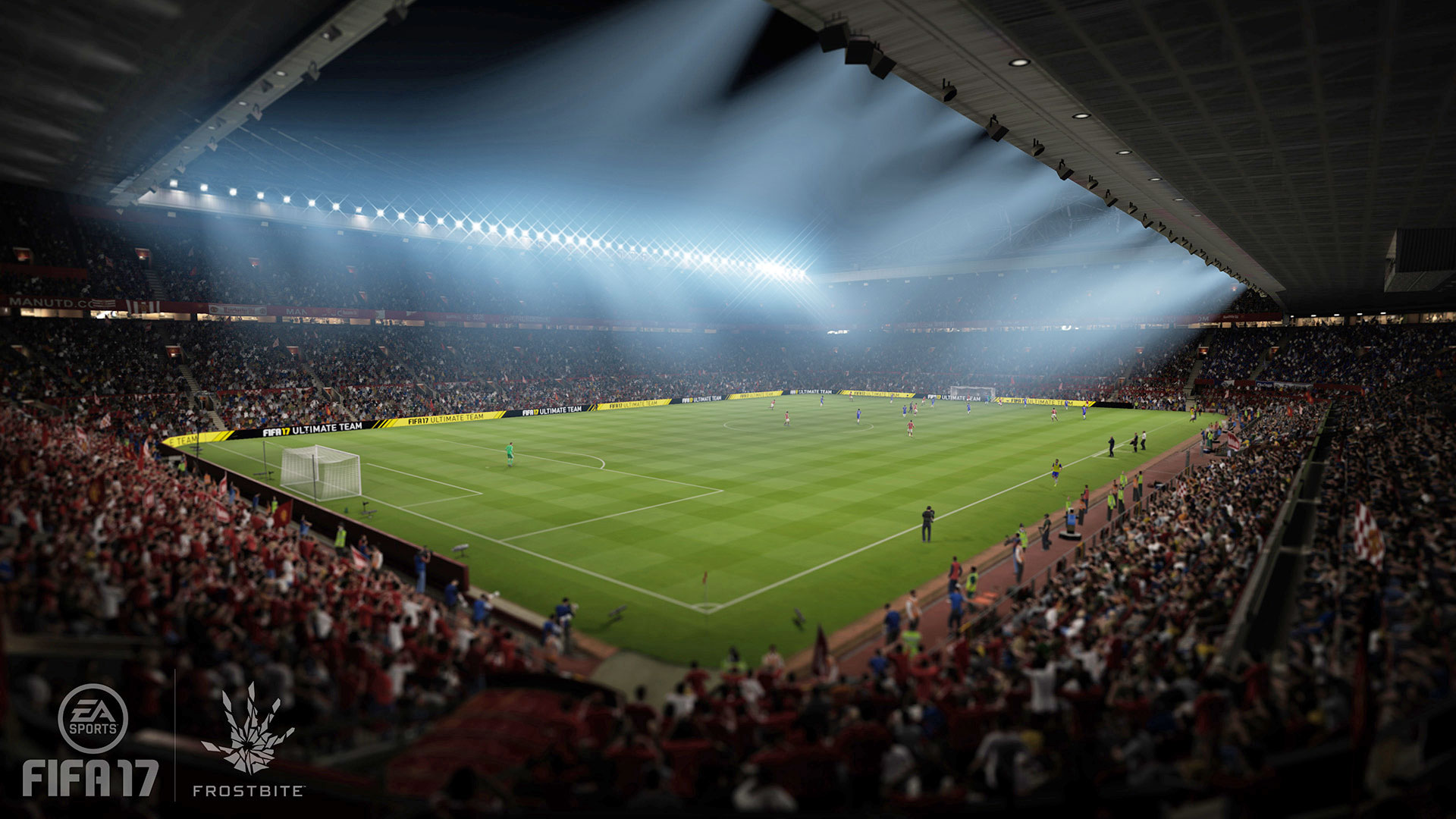
There are three flagship features for FIFA 17: a new story mode, a revamped set piece system and a switch to DICE's Frostbite game engine. First built for Battlefield, Frostbite now powers a vast number of EA titles, including Star Wars Battlefront, Mirror's Edge Catalyst and the upcoming Mass Effect: Andromeda.
The switch in engine has been hotly anticipated by FIFA fans, who have been playing the same basic game since FIFA 14. But Frostbite makes less of a difference than you'd expect. Sure, the graphics -- particularly faces and animations -- look sharper, but rather than rebuilding FIFA from the ground up, EA Sports has integrated large swaths of its Ignite engine (which powers all its team-sports games) into Frostbite. Physics, animations, A.I. and the like are, for the most part, as they were in Ignite, although with future iterations that may change.
In terms of pure gameplay, the revamped free kick and corner system makes the biggest difference. You'll now see much more gamified set pieces that have you choosing not only the power of kick but the starting position of your player and speed of their run up. Elsewhere there's a little more hustle and bustle, with an increased importance on shielding the ball and turning away from players to gain a yard, and the AI has also seen an upgrade, especially in attack, with teammates making more runs to create space.
While the switch to Frostbite hasn't rewritten the rulebook, it has allowed for a broad expansion of the game off the pitch. Where building the game's many authentic stadiums once took a great deal of time and money, artists can create them much faster using Frostbite. It's also easier for the developers to create new skill moves, facial animations and the like, and EA is promising the most variety yet. It's the extra flexibility of an engine that's not purely tailored to render a pitch and players that's allowed EA Sports to add a story mode called "The Journey" to the game.
In The Journey, you'll play as a fictional soccer player named Alex Hunter, fighting your way from squad player to Premier League star and dealing with your in-club rival and meeting famous players along the way. Unlike the career modes of the past, though, it's not only through playing that you'll advance. EA Sports has taken a page from BioWare (another EA company) to an RPG of sorts, complete with off-pitch locations like locker rooms, apartments and press events, and a branching storyline right out of Mass Effect.
I played through the first 15 minutes or so of the mode, and it's looking promising. Proceedings start in a locker room before the game, where you're introduced to Hunter's rival. With half an hour to go in the game, you're brought on as a substitute to try and change the balance of play. Gameplay was straight from FIFA 16's player career mode -- you control a single character rather than the whole team -- but there's custom commentary that helps to advance the story. Before and after the match, I had a few dialogue options to choose from, and they all felt meaningful. Depending on the decisions you make, stats like your popularity with your manager or fans change, which in turn shapes the story you'll be told. EA says it consulted with young Premier League stars -- namely Marcus Rashford, Dele Alli and Reece Oxford -- to ensure the mode felt authentic.
What's new in Pro Evolution Soccer?
The developers of Pro Evolution Soccer (PES) find themselves in a difficult place. After a lull in the late 2000s, the past two years have seen PES games rated higher (by critics) than their FIFA counterparts. But those ratings are not reflected in sales figures. Worldwide, VGChartz' figures had EA selling 15 million FIFA 16 games across PlayStation, Xbox and PC last year, while Pro Evolution Soccer 2016 is listed as selling around 1.4 million copies. Faced with, as a PES spokesperson put it, a rival with "never-ending pockets" in EA, the game's developers are sticking to the task of refining the core game to try and compete.
This year, that means subtle changes to the pacing of the game. The tagline is "Control Reality," and more than ever it feels like every decision matters. When you mess up a first touch or the speed of a pass there's no way to quickly recover. Like in previous iterations, the gameplay favors a slow build up, probing for an opening before playing a decisive ball, and there's a fresh set of tactics (and a much clearer set of menus to access those options) to help you guide your team to victory. PES 2016 was slow, and 2017 is slower still. Whether that's a good or a bad thing is really a matter of preference.
There's also a leap forward in AI, with defenders looking to mark tighter and make more interceptions. This new intelligence is also adaptive, so if you, like many, often pass to a star player, you'll find your opposition will mark him more tightly or even double up on coverage. The idea behind that is not just to make the game more challenging, but also to force you into being more creative with your attack.
Women's soccer
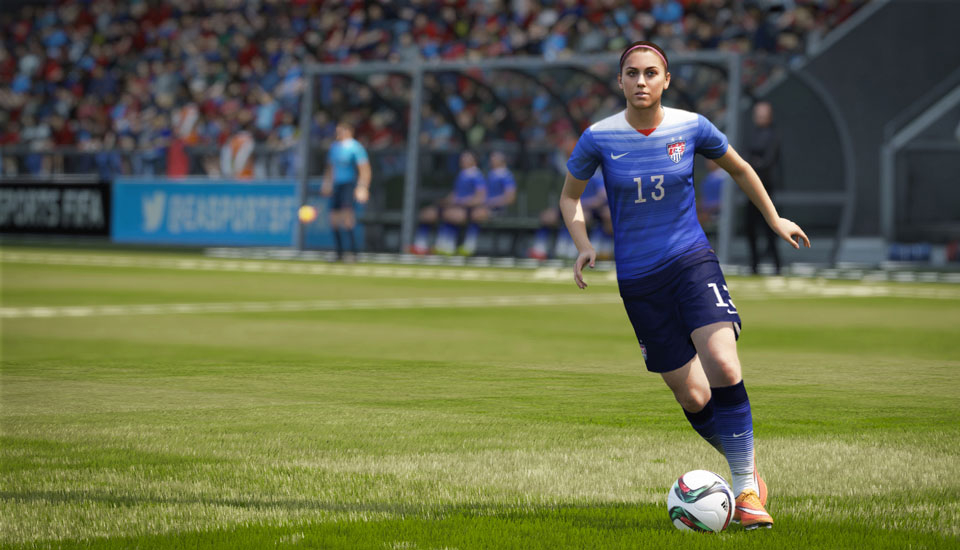
The big ticket item for FIFA 16 was the addition of women's football. At the EA Play event this year, there was no mention of the women's game in the 15 minutes FIFA was showcased. The official gameplay trailer for FIFA 17 has no women, and at the preview event I attended there was no way to field a women's team. It was hard not to walk away from the event seeing last year's mode -- a bolted-on competition that let you play as one of 12 international teams -- as a PR move; last year's flavor.
EA Sports completely disagreed with that characterization when I asked, with a spokesperson saying that "women's football is totally a part of FIFA 17," adding "it's an important piece" of the game and that more details on it will be announced further down the line. It's nonetheless disappointing to see EA, which rightly won many plaudits for its inclusive move last year, completely ignoring that side of the game for the FIFA 17 launch. Especially because if there was ever a mode fit for gender equality in the FIFA series, it's The Journey -- an aspirational story that I'm sure will appeal to the next generation of real soccer stars, both male and female.
Pro Evolution Soccer 2017 continues the series' focus on the men's game. Adam Bhatti, PES's global product and brand manager, told me that Konami is fully focused on improving the gameplay of the core game rather than adding new modes. "It's not that we don't want to do it, it's more that we have a list of things that fans want us to do and we're focused on those things. Putting in women's football before focusing on things like [master league, roster improvements and gameplay issues] would upset our fans."
As much as I'd love to see a women's mode in PES, it's easy to understand why a developer with a smaller budget and a giant competitor takes this viewpoint. Bhatti added that, although no serious talks have been had about adding it to the game, Konami does own the license to the women's Champions League, so there would be "a natural fit there" down the line.
PES vs. FIFA
Having played around 45 minutes of each game, it's impossible to make a call on which is better. FIFA's general gameplay is definitely shifting closer towards PES's. It's harder than ever to gain a yard on an opponent or run past them on the flanks, and I had the most success when mirroring Barcelona's (or, more appropriate for my skill level, Arsenal's) way of passing the ball laterally and waiting for an opening.
Make no mistake, though: FIFA games are still fast-paced, and it's way easier to score than in PES, which is striving further for realism. The developers have implemented a revamped formation and tactics system, with on the fly changes (first introduced, confusingly, by FIFA) now just a button away. It's inarguably a harder game to pick up than EA's fluid simulation, but like recent iterations, it's incredibly rewarding when you get it right.
As I touched on, a key difference between the two franchises is the number of licenses they have the rights to. It's fairly easy to divide the two: FIFA has 30 or so leagues -- including the all-important English Premier League (EPL) -- and lots of international teams, but no UEFA (i.e. European international) competitions. Konami has the Champions League and other UEFA-sanctioned competitions, the top French and Spanish leagues, some South American competitions, and a handful of club licenses, where you'll get the right player names and shirts but unofficial league titles.
The EPL is the most popular national league in the world by viewing figures, and its absence from PES remains a real problem. Konami gets around this by allowing players to modify any team, and this year it'll make it easier to import and export "your creations" via USB. Read that statement as "you'll be able to download the proper teams from a forum somewhere and load them onto your PlayStation or Xbox after a couple of days." I was fine doing swapping memory cards between friends in 2004 when PES was by far the better game, but it's a lot to ask players to fake official teams in 2016.
The question over which soccer game you should buy remains an entirely personal one. For the past two years, I've actually bought both. I recognized that PES offered better gameplay, especially in multiplayer, but the licensing and general presentation of FIFA always kept me coming back for single-player sessions. The addition of The Journey makes FiFA 17 a must-buy for me, while the further refinement to mechanics and pacing will probably make Pro Evolution Soccer 2017 my multiplayer go-to. So ... my answer to FIFA or Pro Evolution Soccer? Buy FIFA if you love licensing, PES if you love realism and, if you can, buy both. Just like last year.






Tip us
843k
110k 86k
157k
RSS
Log in Login with
Facebook Google
Sign up